Request RejectedThe requested URL was rejected. Please consult with your administrator.

Your support ID is: 13049626947541744053

[Go Back]

Umwelt

Resources

What we aim to achieve

Stainless steel for washing machines, plastic granulate for vacuum cleaners and glass ceramic for cooktops - many of the materials we use are finite. Their availability is under pressure as global demand grows. We therefore work to extend product lifetimes and improve material recovery at the end of use. Our vision: a circular value chain. One day, all materials will return to the cycle at the end of their product life.

Thinking ecologically, developing intelligently

At Miele, ecological, legal, and technical requirements are integrated into product development from an early stage. Raw materials, components, design, and packaging are systematically assessed and continuously improved - with the goal of creating functional and long-lasting solutions.

Product development: checking for resource efficiency

We aim to offer our customers products that are as resource-efficient and circular as possible. To achieve this, we consider relevant aspects from early development stages through to series production. An environmental checklist supports us in systematically identifying ecological priorities. An international legal register guides us in meeting regulatory requirements worldwide. In addition, we develop future scenarios to anticipate upcoming developments early on. For significant technological changes, we also prepare comprehensive life cycle assessments.

Packaging: testing innovative materials

We aim to make our packaging more resource-efficient. For this reason, we continuously evaluate alternative materials to replace conventional, plastic-based options such as bubble wrap. One challenge lies in the use of so-called bioplastics, which often do not yet match the performance or market availability of fossil-based materials. To assess the suitability of new materials, we analyze their mechanical-physical, biological, and chemical properties. This allows us to identify strengths and weaknesses under different conditions - for example, at high humidity - and make well-informed decisions about their overall applicability.

Recyclates: thoroughly tested

When selecting materials, we pay close attention to resource efficiency and quality. Metals such as carbon steel and stainless steel are not only largely recyclable but are increasingly used with a high share of recycled content. Plastics, too, are to be replaced more extensively with recycled materials - preferably sourced from post-consumer waste. We place strict requirements on these recyclates: they must be durable, suitable for premium-quality design, and free from unwanted substances. However, their availability is often limited and not always homogeneous in composition. For this reason, we thoroughly test and document all recyclates we use.

Recylates in use

Recycled materials in household appliances and accessories

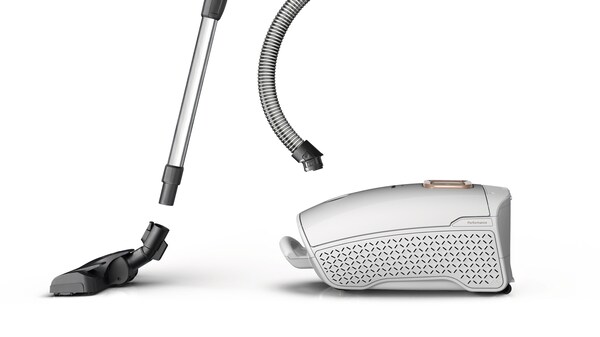
We already incorporate recyclates into our products today. In our vacuum cleaners, parts of the HEPA filters as well as selected dust bags and nozzles contain a high proportion of recycled material. For example, the HyClean Pure dust bag is made of 80% recycled content. We are also increasingly using recyclates in our dishwashers. One example is the PowerDisk for the AutoDos automatic dispensing system: since 2022, the cartridge cup for the granulated detergent has been produced from recycled material - while maintaining consistently high quality- of which at least 95% originates from household waste.

Plastics expertise at the Miele Technology Center

At our Technology Center Plastics in Warendorf, we develop innovative solutions for the use of recyclates. This includes exploring alternative manufacturing technologies such as thermoplastic foam injection molding. Our experts work in close exchange with suppliers of recycled raw materials and recycling technologies. As part of various pilot projects, we test the use of recycled plastics such as polypropylene (PP) and acrylonitrile-butadiene-styrene (ABS). Key criteria in these evaluations include mechanical stability as well as color and surface quality. Analyses show that plastic from old washing machines can indeed be used again in a new washing machine - or in another appliance.

Used cast iron instead of crude iron

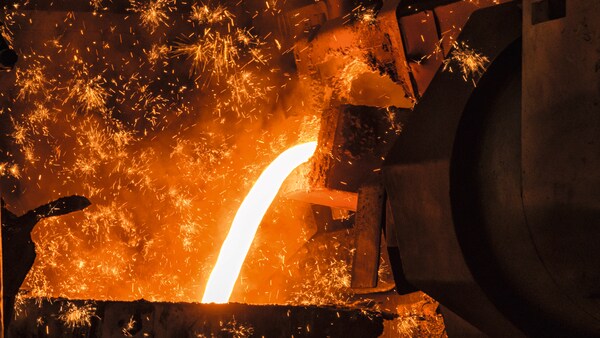
Since early 2025, we have increasingly been using used cast-iron products - such as brake discs - as raw materials. As a result, we have been able to reduce the use of crude iron by around 40% and now require only about 20%. Previously, crude iron had to undergo a pre-treatment process in an energy-intensive blast furnace. By adapting our internal melting processes, we have significantly lowered energy consumption while at the same time reducing the associated greenhouse gas emissions.

Packaging: focusing on recyclability

The shipping packaging for our household appliances must be robust enough to support the high weight of the products and protect them reliably during transport. Our goal is to expand the use of paper-based alternatives and to further reduce the consumption of plastics. For our vacuum cleaner packaging, we have already achieved this: expanded polystyrene (EPS) has been completely phased out. Today, almost all vacuum cleaner packaging placed on the market is free from EPS.

Using household appliances for longer

“Repair instead of replace” - we focus on repairing rather than exchanging products. In addition to designing our appliances for maximum repairability, we aim to prevent discarded devices from being disposed of too early, as many of them are not yet at the end of their potential service life. For this reason, we are exploring new circular business models that enable the continued use of suitable appliances while also opening new customer segments.

Designed with repairability in mind

Replacing an appliance is always the last resort. That is why repairability and the ability to update products are key considerations from the very beginning of Miele’s product development process. Every Miele product is engineered to ensure that repairs and the replacement of components require as little effort as possible. The availability of spare parts is planned with equal care: Miele stocks around 72,000 functionally relevant spare parts for up to 15 years after a product line has been discontinued.
More detailed information about the quality and longevity of our products can be found under Products.

Refurbished parts program for electronics

A repaired, tested and fully functional electronic component as a replacement part? Since 2024, customers in several European countries have been making use of this option with increasing enthusiasm. In Germany, Greece, Italy, Austria and the Netherlands, they can now choose refurbished spare parts offered at a significantly lower price than new components. This helps conserve natural resources, reduce greenhouse gas emissions and lower repair costs. At the same time, it extends the lifespan of appliances that might otherwise be replaced due to a malfunction.

A second life for washing machines

A pilot project in the Netherlands explores how refurbished washing machines can be put back into use. In a rigorous process, trained specialists inspect each appliance, repair any defective components and update the software. After this thorough review and refurbishment, the machines are offered with a “refurbished” label as a more affordable and environmentally conscious alternative to new products. Since 2022, the Dutch sales organization has returned around 600 appliances to households.

Software for longer appliance life

To further enhance durability, we rely on smart connectivity solutions. With the help of diagnostic tools, our service technicians can implement software improvements not only on new appliances, but also on those already in use. Since 2023, we have also been able to support our customers remotely: with their consent, the appliance’s condition can be captured automatically in the event of an error and used for analysis. This often allows the issue to be resolved without the need for an on-site visit.

Research and collaborations to advance circularity

Miele is actively engaged in projects that promote circularity. Our aim is to develop practical solutions, identify challenges at an early stage and test new approaches under real-world conditions.

Designing for circularity

In the “Sustainable Lifecycle Engineering” (SLE) project of the it’s OWL innovation cluster, we support product developers in systematically integrating sustainability considerations into their decision-making processes from the earliest stages. The goal is to design products and systems that are more sustainable throughout their entire life cycle and ideally aligned with the principles of the circular economy.

Transforming for digital progress

In the research project “Digital Transformation of Circular Economy for Industrial Sustainability” (DiCES), we are working together with partners from academia and industry to develop a multidimensional circular economy system based on the example of Miele washing machines. The focus is on data-driven models and digital tools that enable a sustainable transformation.

Networking for innovation

Together with the innovation network Impact Hub Berlin, Miele experts explore solutions for advancing the circular economy. In 2023, we jointly hosted a workshop focused on circularity in vacuum cleaners. The session brought together specialists from design, engineering and circular economy fields. Particularly inspiring was the exchange of knowledge and creativity from the young team with the practical challenges faced by industry.

Deep dive into disposal and recycling

Waste management: carefully sorted

Responsible use of natural resources also means avoiding waste wherever possible. In industrial production, this is not always simple. In our facilities, most waste consists of metal scrap. At the iron foundry in Gütersloh, sand, slag and furnace debris remain as by-products that require proper handling. Additional waste streams arise from plastics, packaging materials and electronic scrap, all of which we sort meticulously into reusable containers before handing them over to specialized disposal partners. Chemical waste such as used oils and emulsions is managed separately by trained employees and then transferred to certified service providers. We have achieved our goal: around 95 percent of all waste is recovered.

Take-back and responsible disposal of end-of-life appliances

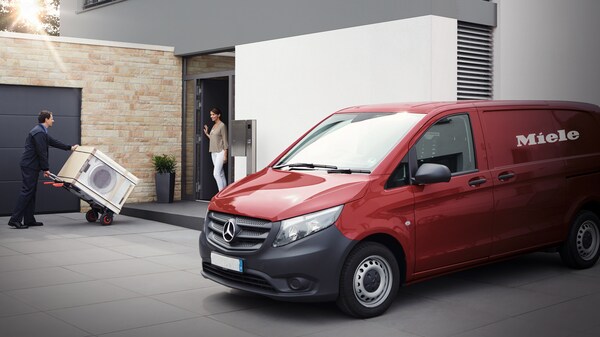
Throughout the entire disposal chain, materials should be processed in an environmentally responsible manner. Illegal trading of waste electrical and electronic equipment is unacceptable. For this reason, we are engaged internationally and work together with collection systems and partner organizations to ensure the proper take-back of end-of-life appliances, batteries and packaging. If customers wish, Miele’s specialist retailers can also collect old appliances when delivering a new product, ensuring that they are transferred to certified facilities for proper treatment and recycling.

Disposal standards

Miele is committed to advancing and harmonizing standards for the disposal of electrical appliances. We contributed to the development of the European standard EN 50614:2020, which defines the requirements for the reuse of waste electrical and electronic equipment.

More detailed insights can be found in our sustainability report

Additional focus topics

Climate

Water