Sustainability at Miele

Products – forever innovative

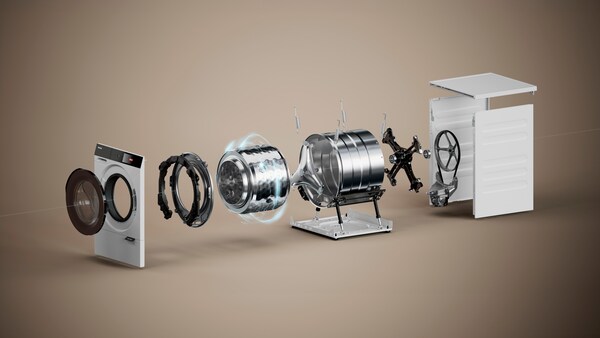
Tested for everyday use

Our aim is to develop products that stand out for their quality, durability, innovation, performance, comfort and timeless design. From the very start of the development process, we take into account aspects of energy efficiency and the most resource-efficient use of materials and resources possible.

Product strategy from day zero – from concept to delivery

Our sustainable product strategy focuses on energy efficiency and circularity.  We take aspects such as reparability and durability into account right from the development stage. Through collaborative working and targeted investment in research, we integrate new technologies at an early stage whilst keeping environmental and social impacts in mind. 

Discover more

Learn more about our approaches to circularity and more energy-efficient production in our focus areas.

Tested for up to 20 years

Miele tests most of its domestic appliance series for the equivalent of 20 years’ use*.  The appliances tested include dishwashers, refrigerators, washing machines, dryers and washer-dryers, ovens, and vacuum cleaners. For household washing machines and tumble dryers, we assume five program cycles per week - amounting to 5,000 cycles over 20 years. Commercial appliances are also subjected to lifetime testing. For example, Miele calculates that cleaning and disinfection units of the PG 85 series run two program cycles per day, which corresponds to over 15,000 operating hours in 20 years. 

It’s all about usage 

We aim to make the Miele product portfolio increasingly better - with a focus on energy efficiency, water savings, and intelligent features.

10% below the threshold for Class A

Since May 2025, we have been offering dishwashers in all marketing classes with energy efficiency class A - thanks to an optimal balance of energy consumption, program duration, and cleaning performance. The Series G 76XX dishwasher operates 10% below the threshold for Class A energy efficiency (0.543 kWh). This represents particularly efficient use of resources. Energy consumption, running time and temperature are attuned to each other in order to avoid unnecessary energy consumption. 

Cooking with residual heat

In our Generation 7000 ovens and steam ovens, the Eco Fan Heat function makes use of residual heat, reducing energy consumption by up to 30 percent compared with other programs. Almost all Miele ovens and steam ovens reach energy label class A+, with some models even achieving A++.


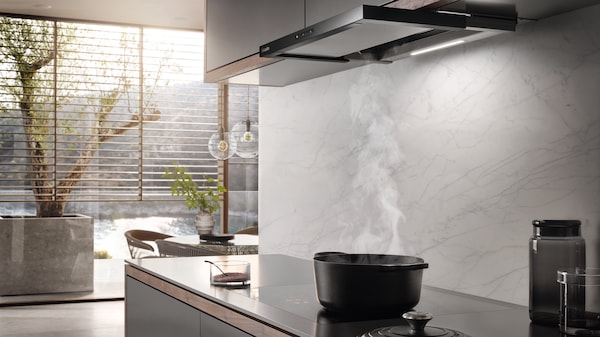
Efficient Cooker Hoods

An increasing number of Miele cooker hoods are now equipped with an eco motor. This type of direct current motor consumes up to 50 percent less energy compared to a conventional motor. It also operates exceptionally quietly, without compromising performance.


Commercial appliances from Miele Professional: efficient, hygienic, intuitive.

Whether in catering, care facilities, or laboratories, our commercial appliances are optimised for efficiency, short running times, and low resource consumption across a wide range of applications. Hygiene is essential everywhere - for example, in our dishwashers: in the MasterLine series, fresh water ensures hygienically clean results in every wash cycle. The controls are easy and intuitive to use and can be set to any of 32 languages.

Commercial tank dishwashers

Tank dishwashers from Miele Professional are optimised for use in the catering and hotel industries. They feature a permanently heated tank that retains rinse water for several wash cycles, significantly reducing energy consumption. In addition, integrated heat-recovery systems use waste heat from the washing process to preheat fresh water, further improving overall energy efficiency.


Refrigerators: a systematic approach to reducing food waste

Our freshness systems in refrigerators can significantly extend the shelf life of food. PerfectFresh systems precisely regulate temperature and humidity to slow down the natural ripening process - particularly effective for fruit and vegetables. As a result, food stays fresh for up to five times longer than in a conventional crisper drawer.

Design for all

Not only elegant and aesthetic, but also intuitive and accessible: our approach to design is guided by the needs of our diverse customer base. That is why we adhere to the principle of universal design – complemented by a focus on environmental considerations. Our aim: through design and clear user guidance, we want to encourage people to make greater use of energy- and resource-saving eco-features. A timeless and functional design can help ensure that people enjoy using products for longer.

Vooper – concept for a circular vacuum cleaner

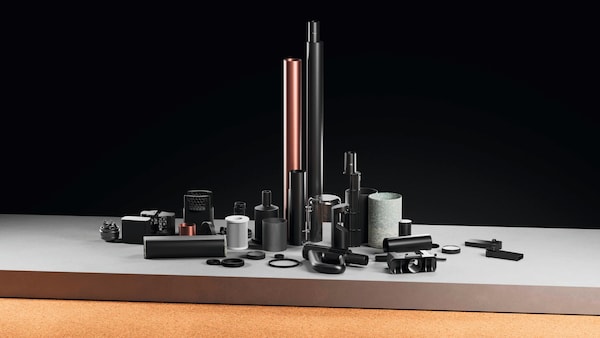
The “Vooper” is a design study that explores the issue of how to design domestic appliances so that their materials can be easily reused or recycled once their useful life has come to an end.  


The Vooper truly lives up to its name. It’s derived from “Vacuum Cleaner” and “Loop”. This perfectly expresses the concept that defines the machine. It has been designed for the circular economy. In concrete terms, this means that the vacuum cleaner has a modular design. The individual building blocks and components are made up of single materials so that they can be returned almost entirely to the material cycle at the end of their service life. The filter and rechargeable battery are easily accessible and can be changed straightforwardly by the users. 

The Vooper is a design study and not a series product. In fact, it serves as a test bed for piloting approaches to design, identifying challenges and assessing the principles that could be transferred to other product areas in future.  

The study highlights that designing for the circular economy is not something that only needs to be taken into account at the end of a product’s life cycle. Circularity needs to be integrated right at the start of the appliance’s journey.  

Further information on the Vooper can be found here

During the use phase

Energy efficiency is not only important in the eco programme – but also in real-life use. We want to keep reducing the energy and water consumption of our devices with innovative technologies and smart features.

Savings with the Consumption Dashboard

We want to ensure that our household appliances are as energy‑efficient as possible.  The Consumption Dashboard of the Miele App allows the dishwasher’s energy and water consumption to be easily monitored – by the week, month or year – and it provides a comparison with the average of all other users. This is a fun way to encourage low-energy use of a dishwasher while giving a host of other tips and support.

SmartMatic – greater convenience, lower consumption

With SmartMatic, the latest generation of W2 washing machines offers an intelligent programme that keeps consumption values constant for loads of 1 to 4 kilograms. The washing time, temperature and amount of detergent are adjusted automatically. Compared to the Eco 40-60 programme, SmartMatic offers a shorter running time and saves energy, water and detergent compared to standard programmes.

A classic: eco programmes for washing machines

Eco programmes are designed to reduce energy consumption compared with other programmes on the same appliance. In washing machines and dishwashers, this is achieved, amongst other things, by using lower water temperatures; depending on the appliance and programme, this may result in longer cycle times. 

Almost all of our washing machines for domestic use achieve energy efficiency class A. In 2024, more than 15 per cent of the appliances sold were 20 per cent below the threshold for energy efficiency class A as defined by the EU energy label. We are working to further increase the proportion of these appliances. Our development target is to achieve a level 40 per cent below the threshold for energy efficiency class A in future. 

Real-life use: room for improvement

Despite their advantages, surveys show that only few people use eco programmes. This was the finding of a study commissioned by Miele in Germany in July 2023. According to the study, potential savings often remain untapped. To raise awareness of the benefits of eco programmes, users of our appliances receive a forecast of the water and electricity consumption for the selected programme before it starts. This allows them to see immediately that, for example, a programme with longer running times or lower temperatures requires less energy. At the end of the programme, the actual consumption is displayed in kilowatt hours and litres.

Smart solutions for households and businesses

Miele bietet ein umfassendes Portfolio vernetzter Haus- und Gewerbegeräte. By the end of 2024, almost 59 percent of our domestic appliances sold (excluding vacuum cleaners) were already connected – and this figure continues to rise. With the Miele app, voice assistants, and an open interface for third‑party providers, Miele offers smart solutions for everyday life. Appliances can be conveniently controlled, updated via remote maintenance, and enhanced with functions such as Smart Food ID or new washing programmes. 

In the commercial sector, the MOVE Connect platform enables centralised management of Miele Professional appliances in 18 countries – including cross‑location analysis of consumption and efficiency. 

Where our ideas come from

We meet our product requirements by driving strong internal and external collaboration and fostering open communication.

Input from employees

In addition to the “Idee M” employee suggestion scheme, Miele provides employees at several locations with a database‑driven ideas platform. There are also idea scouts for the various product areas: they oversee idea development, guide decision‑making through a dedicated committee, and regularly inform employees about new ideas and campaigns.

In dialogue with suppliers

The expertise of our suppliers is particularly valuable when it comes to new materials or the demanding field of electromechanics. Regular joint product‑innovation workshops help us identify quality‑related issues at an early stage.

Research and start-ups

We regularly exchange ideas with interest groups and expert partners such as the Öko‑Institut in Freiburg and the Braungart EPEA research and consulting institute. To develop forward‑looking solutions, we also advance projects with start‑ups in areas such as smart home, customer support, digital marketing, and Industry 4.0. Forms of cooperation range from joint projects and management support to direct equity investments.

Sustainability in Detail

Management

News & Stories

Environment

Social

Governance