Environment
Climate
Our climate targets
Miele supports the goal of the Paris Climate Agreement to limit global warming by 2100 compared to pre-industrial levels. Our reduction targets follow the guidelines of the Science Based Targets initiative (SBTi), which confirmed our climate strategy as scientifically sound in summer 2021. We have already achieved our previous targets ahead of schedule and are now developing new ones to further strengthen climate protection. To this end, we are preparing a transition plan aligned with the SBTi Net-Zero Standard by 2026, with the aim of achieving GHG neutrality across the entire value chain. At the same time, we are working on long-term climate targets for Miele.
Scope 1 & 2
By 2030, we aim to reduce our absolute Scope 1 and Scope 2 emissions by 50 percent compared with the 2019 baseline. Since 2019, we have already reduced our emissions by 54 percent - achieving our climate target ahead of schedule.
Scope 3
We aim to reduce emissions from the use of our products (Scope 3.11) by 15 percent by 2030 compared with 2019. By 2024, we had already exceeded this target significantly, achieving a 31 percent reduction - and thus reaching our goal earlier than planned.
Our roadmap for climate action
We are currently developing new targets to further strengthen our climate action efforts and preparing a transition plan based on the SBTi Net-Zero Standard to achieve GHG neutrality across the entire value chain.
How we approach it
We bring together our approach and measures for climate action in our company-wide climate strategy, which is embedded in our overarching sustainability strategy. At the heart of this climate strategy is the principle of avoiding and reducing GHG emissions and offsetting them only where this is (still) not possible. Key instruments for achieving this include investments in energy efficiency measures, expanding our own renewable energy generation, and systematically reducing GHG emissions along the upstream and downstream value chain.
Renewable energy at our sites
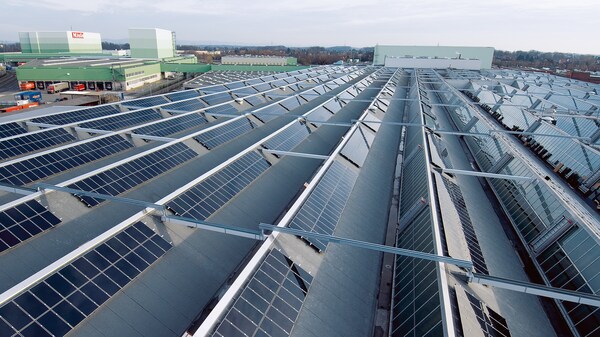
At our 19 production sites, we already use our own electricity from renewable energy sources or assess whether this is feasible — for example at the sites in Bielefeld, Bünde and Oelde. In addition, three of our sites (Gütersloh, Euskirchen and Ksawerów) are currently equipped with geothermal systems providing a total heat output of 3,000 kilowatts, with further installations planned.
Savings potential during the use phase
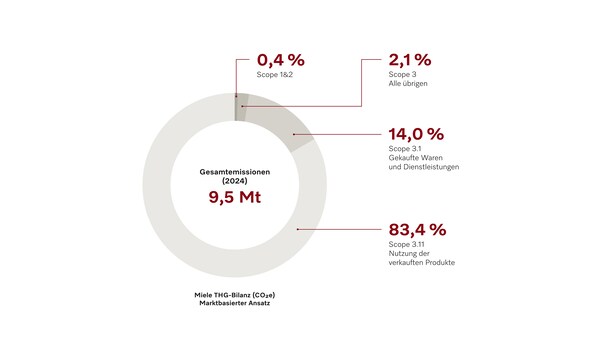
Most CO2 emissions occur during the use of our household and commercial appliances: according to our calculations, this accounts for around 84 percent. To reduce these so-called Scope 3.11 emissions, we continuously improve the energy efficiency of our appliances and develop programs that help save energy during use. Detailed information on these solutions can be found in the Sustainability Report under Products and Social – Customers.
Responsible sourcing: CO2 reduction
When purchasing raw materials and pre-products, we already take their CO2 footprint into account. Goods and services purchased (Scope 3.1) account for 14 percent of our total greenhouse gas (GHG) emissions. In the long term, we aim to develop products that are GHG-neutral in manufacturing. Our ambition is therefore to work exclusively with suppliers who themselves commit to integrating climate protection into their business practices. We set out our requirements in our Supplier Code of Conduct. Suppliers must implement effective measures in line with the Paris Climate Agreement to reduce their direct and indirect GHG emissions.
CO2-reduced steel
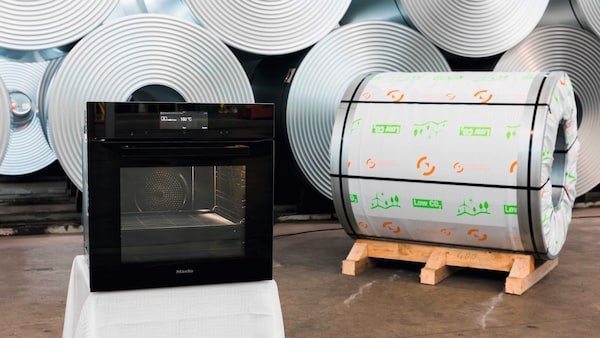
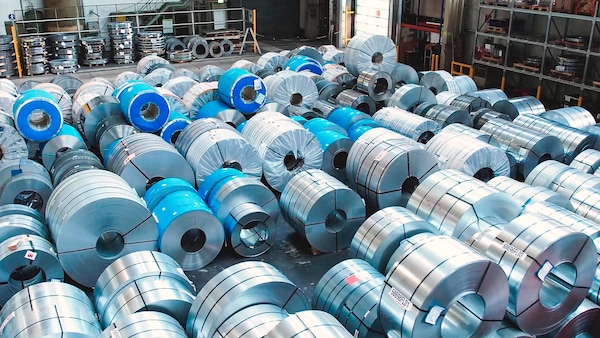
Steel accounts for the largest share of our Scope 3.1 emissions. Since 2021, we have therefore been using steel in our cookers and ovens that generates 66 percent fewer greenhouse gas emissions during production compared with conventionally produced steel. We have also signed declarations of intent with strategic partners to increasingly source this type of steel in the future.
CO2-reduced aluminium
Produced using hydropower: Since 2023, we have been processing aluminium that is manufactured entirely with electricity from hydropower. As part of a pilot project, it is used in our ovens.
Regional sourcing of materials and pre-products
By sourcing close to our production sites, we shorten transport routes and thus reduce environmental impacts. At the same time, we strengthen regional economies. The manufacturing processes of our predominantly European suppliers also result in a lower CO2 footprint compared to the global average.
More detailed insights can be found in our sustainability report
Additional focus topics
Water